
It’s been a mixed week this week, with a lot of threads to Jeans story unfolding and some frustratingly remaining elusive.
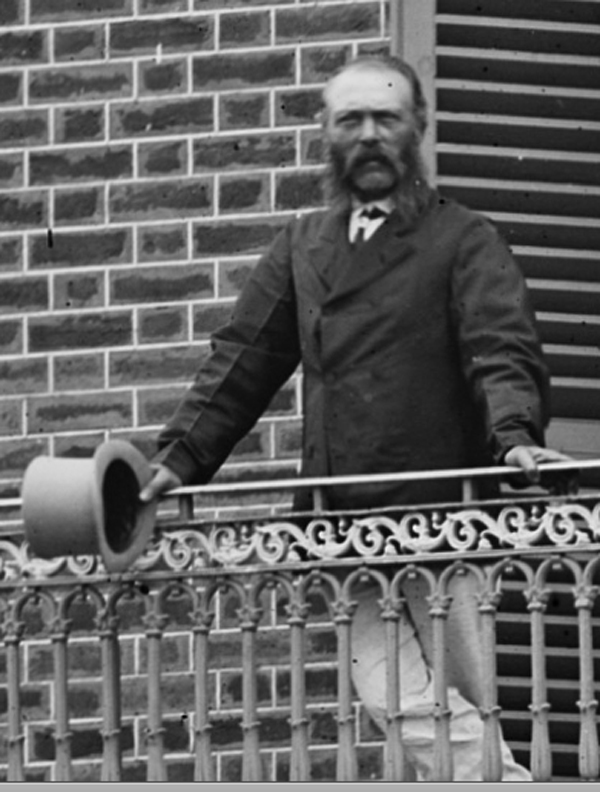
His birth place, and record of it, refuses to be found, but after a break from two years of exploring French archives I am reviewing all the records I have recorded with fresh eyes.
It remains to be seen if there are connections to all the Serisier’s I have on file and I do have to fight the desire to piece things together to suit me which may not be there.
It is also continuously overwhelming just how much information is still out there that I have not even approached.
One step at a time.
What I have started doing this week in ernest is writing and piecing together the story and stories that intertwine with Jean’s life.
I feel the book is starting to really take shape and the deeper story I have hoped to find is finally emerging.
Sorry, this is starting to sound like a Sade song (all about me) so let’s get to the recap.
I picked up a new lead this week, and started exploring Dr Tibbets. He is an antagonist of Jean’s which involves a very public fisty-cuffs on the Macquarie Street over some slight the good and extremely well respected Doctor, pays to Mrs Serisier.
Respectfully, Jean apparently comes to her defend her honour. So there was bad blood.
Oddly they shared the magistrates office together and presided over court cases jointly. On one occasion I found reported in the Sydney Morning Herald, Jean begins the hearing with an explanation that he has no problem whatsoever serving alongside the good Doctor because there seems to be some doubt.
Tibbit’s obituary in the Daily Liberal in the early 1900s of course highlights the good points only. I suspect there were cultural clashes and no doubt personality one’s too. Tibbits spent three months in the penal colony of Hobart and published a book about his experiences before he moved to Dubbo in the 1850s. He came and went but was widely respected and liked throughout the region which for a long time appears to be all his area to serve as the only Doctor and certainly Dubbo’s first.
It’s been bugging me a little bit too, that Jean’s name has remained as one associated with the town’s founding, and yet there are so many other equally strong figures living in the village initially, who were contributing in significant ways.
I have no doubt Jean was a little proud and why not. He hauled himself out of obscurity in a new colony to become a Man of Mark. Not an easy task without a hell of a lot of hard work.
I’ve also been thinking about his motivation. What made him tick. It’s always struck me as quite random that he would run indisputably the most successful trading company in Dubbo from the city’s inception to drop it for a significantly larger task of starting and running a vineyard.
It stands to reason it was his lifelong dream and the trading business was simply a means to that end.
Who doesn’t hit their 40’s and start thinking, is there something else I should be doing?
Planting 70,000 vines is no mean feat today, let alone in the 1860s when transporting the plants themselves would have taken a good two weeks from Sydney (how did he keep them alive?); then storing them before planting. The whole operation is really requiring some sound knowledge on the subject.
No doubt he had advice or help but it appears from newspaper clippings that it all revolved around him until he left for France in 1879 and employed Rene Bertaux, the young personality who would woo Jean’s widow and sadly bring all of Jean’s exploit’s crashing down – without ill intent I think, and rather just ambition beyond his own ability.
So, it’s been a mixed week. One step forward, two steps back, back ever progress.
Exiting week to know I have been able to do a lot of writing thanks to my husband who has made space for me by taking the kids out.
My goal is to write about 60,000 – 100,000 words. I have over a third done in draft.
It’s on it’s way.
Thanks for joining the journey.
Yvette
 King of Dubbo
Hello Yvette,
I remember my father talking of the Tibbets family but without reference to any lingering hostilities. Probably just a couple of prickly old boys who struck sparks off each other.
There is another story I recall my father telling which occurred at the opening of the first bridge built over the Macquarie River. Apparently, the faction championed by the Serisiers wanted to call the bridge the ‘Albert Bridge’ but they lost out…I think it was called the White Bridge? But that didn’t stop the Albert faction though, for on the day of the opening they went down an hour before the ‘official’ opening and performed their own ‘unofficial’ opening ceremony.
Regards,
Richard
Hi Richard. These are colourful scenes! Dr Tibbits and Jean came to a fist fight one day on the street, an event documented by the local paper in wonderful detail. Jean was charged with assault but a very large number of people gathered together their pennies and paid for his bond, not that he couldn’t afford it, but I think it was a show of support. Apparently Dr Tibbits had insulted Mrs Serisier and her maid/anny and Jean must have seen fit to defend their honour. Tibbits and Jean shared the duties of magistrate even overseeing cases together so they worked closely with each other but I’d say it was a strained relationship – unless they laughed about it later. Dr Tibbits obituary reads that he died a very well respected doctor and person, but then obituaries tend not to highlight anyone’s faults.
I didn’t know about the bridge naming and the tensions it caused but I LOVE that there was a private ceremony. The bridge certainly was a talking point in the town. When a toll was proposed in 1872, it provoked an effigy burning of the local politician (name escapes me now) but the protestors and effigy burners were primarily enraged women. Sadly that event took place in the same week while Heloise was dying of typhoid fever, probably upstairs at Bo Allia, so the protest would have been in full sight of their living quarters. It was also the hottest summer on record and bush fires raging around the state.
Your family stories are golden Richard. Thank you.
Yvette
Hello again,
The bridge naming was an amusing tale and ‘our’ story is that it was Margaret who actually cut the ribbon!
I’ve had a look in Jean Emile’s bible (which I have) and the entry for Heloise’s death is 10th December, 1871. She was six years old and died of typhoid fever.
Jean Emile’s hand written note is as follows:
‘La volonte de dieu soit faite sur la perre comme au ciel!’
‘H: Elle fut la fleur de mon Coeur!!!!’
Nearly 150 years later you can still feel the emotion!
The child who died that hot summer in 1872 was Leonce Phillibert Lorenzo who died of whooping cough on 18th June.
They were hard times.
Regards,
Richard
Thank you for the corrections. You have stumped me with Jean’s note! I think the bridge toll protest happened at the time of Heloise’s passing and the cutting of the ribbon definitely at a different time. Hard times is an understatement. In modern times you often hear the saying that is unnatural to bury your child but back then it seems so common, but clearly no less devastating. Looking at Jean’s life as a whole I have always thought the loss of Heloise affected him deeper than anything else.
It was one of the first scenes from his life which I drafted when I started this project. Your message will certainly add a new, meaningful layer.
Thank you again.
Yvette
Yvette & Richard, it’s so good to see the collaboration between you both which should bear fruit in the long run. All those pieces of the giant jigsaw, eh? Best of luck to you!
William!!! Thank you. It gives me confidence knowing you’re both in the wings of this project. Good to hear from you.