
Since learning the first few details of Jean Emile Serisier’s life and the role played by the French Revolution to dramatically change his family’s course I often imagine the history of the city he went on to found in rural New South Wales, Australia; Dubbo, has its beginnings in the Department de Gironde in Bordeaux. Jean Emile’s ancestors fell to the blow of the Reign of Terror which miraculously spared his own father’s life but set them both on a new course, swept along by the emergence of the New World – Australia, America and South America.
Jean Emile must certainly have been the product of his father, Louis’s rescue or secret change of identity as a child (the facts yet unknown) but which saved him from La Guillotine or gallows, one of which consumed the lives of Louis’s father, mother, sister and brother, according to Serisier family lore.
Jean Emile may have known the stories as a boy or discovered them later in life or perhaps not at all.
For any aristocrat alive in 1793 when Jean Emile’s grandparents, aunt and uncle were executed, times were dangerous beyond comprehension. Spared the initial rumblings of the Revolution, the bloodletting of 92 and 93 must have been an endless horror. Perhaps his family did not speak of it through fear initially. Unfortunately these details will probably have to be by my own design in my book.
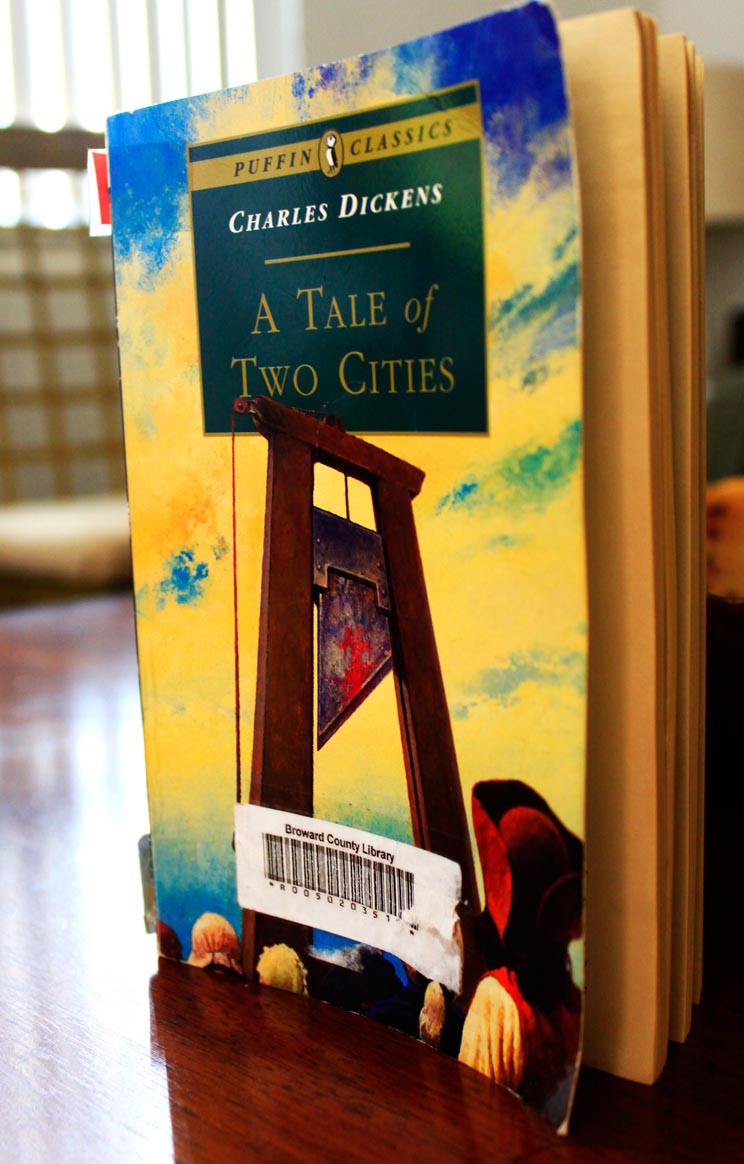
As part of my research I have been reading Charles Dickens Tale of Two Cities. No doubt he was the J.K.Rowling of his day… he is an absolute master craftsman. His retelling of the Bastille and later the mass imprisonment of the aristocracy in France is to be transported there. Inspiring stuff.
There is a poignant moment in Book 3 when Darnay, a french aristocrat who had rejected his oppressive class and hiked it to England where he married and had a child, has returned to Paris at the wrong time (how could he not know) to save a former servant from certain death (honourable) to discover his name is on the wrong list and it lands him in gaol, certainly to be executed. Upon entering the cell Darney is expecting to find a heathen class of people, rough, ragged and dangerous, but is met by a crowd of polite, cultured and polished prisoners.
Dickens writes, “It struck him motionless. The gaoler standing at his side, and the other gaolers moving about, who would have been well enough as to appearance in the ordinary exercise of their functions, looked so extravagantly coarse contrasted with sorrowing mothers and blooming daughters who were there – with the apparitions of the coquette, the young beauty, and the mature woman delicately bred – the inversion of all experience and likelihood which the scene of shadows presented, was heightened to its utmost.” (Puffin Books, 1995, p243).
First published in 1859 I do wonder if Serisier ever read it? Dickens’ son Edward who would have been 7 at the time Tale of Two cities was published, eventually immigrated to Australia and settled a property near Wilcannia which is almost a 6 hour drive west from Dubbo, in Serisier’s later life. Dickens junior became the member for Bourke so it’s more than possible Serisier met him at some point.
At any rate, Charles Dickens’ account of the French Revolution brings that terrible period which rushed the Old Worlde to its end truly to life. In Serisier’s own life, though not born, it is very much a part of his story and fate.
Fingers crossed I can conjure an account of Serisiers grandparents’ last days in a similar light. Lucky I love a challenge! 🙂
 King of Dubbo